NNPCL’s Warri Refinery Shutdown Raises Concerns Over Operational Integrity
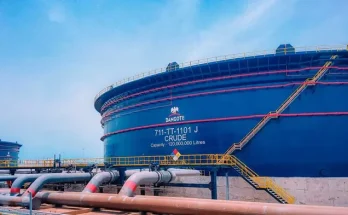
The Nigerian National Petroleum Company Limited (NNPCL) is facing mounting criticism regarding the management and operational transparency of its refineries, especially following the recent shutdown of the Warri Refining and Petrochemical Company (WRPC). The refinery has been closed since January 25, 2025, due to significant safety issues with its Crude Distillation Unit (CDU) Main Heater.
A document obtained from the Nigerian Midstream and Downstream Petroleum Regulatory Authority (NMDPRA) in April 2025 revealed the stark realities of the situation. The report disclosed that, despite a hefty $897.6 million investment in maintenance costs, the WRPC has failed to produce Premium Motor Spirit (PMS) and has remained non-operational barely a month after former NNPC CEO Mele Kyari heralded its recommissioning.
The Warri Refinery’s Struggles and the NNPCL’s Broken Promises
Industry experts and stakeholders have expressed deep concerns about the state of Nigeria’s oil refining capacity, especially with the NNPCL’s failure to achieve the projected operational goals. The Warri refinery, with an installed capacity of 125,000 barrels per day (bpd), had been closed for years due to technical issues, but was revived on December 30, 2024. Despite early assurances of its full functionality, the refinery’s premature closure in January 2025 has raised significant doubts about the NNPCL’s operational integrity.
The refinery’s primary goal was to produce and store critical petroleum products, including Straight Run Kerosene, Automotive Gas Oil (diesel), and both heavy and light Naphtha. After an initial announcement by President Bola Tinubu celebrating the revitalization efforts, concerns over efficiency and transparency have overshadowed the initial optimism.
Mele Kyari, speaking on the revitalization, emphasized the successful restart of the refinery, despite ongoing work. He stated, “We have proved that it is possible to restart a plant that was deliberately shut down,” highlighting the team’s dedication to overcoming previous technical setbacks.
However, the recent shutdown has led experts to question whether the NNPCL’s claims about the refinery’s operational readiness were overly optimistic or, in some cases, misleading.
The Port Harcourt Refinery: A Tale of Underperformance
Meanwhile, the Port Harcourt Refining Company, another NNPCL-owned facility, is also struggling to meet its production targets. Although it resumed operations in November 2024, it has been operating at only 37.87% of its installed capacity, well below the anticipated performance. Official statements by NNPCL spokesperson, Femi Soneye, claimed that the Port Harcourt refinery was operating at 70% capacity by the end of 2024, with plans to increase production to 90% in subsequent months. However, data from the NMDPRA reveals that the refinery is producing far less than expected, failing to meet its projected output.
The Port Harcourt refinery, with an installed capacity of 60,000 bpd, has also faced its own set of challenges. While it had an initial output target of 218 million liters of refined products per month, its average output between November 2024 and April 2025 fell short of this mark by over 135 million liters. The refinery’s underperformance continues to be a significant source of concern, especially as Nigeria strives for energy security and greater self-sufficiency in fuel production.
Financial Implications and the Call for Accountability
The NNPCL’s attempts to rehabilitate these refineries have been funded through significant financial investments. The Port Harcourt refinery’s $1.5 billion rehabilitation project was meant to breathe new life into a facility that had been dormant for over two decades. However, despite these investments, both refineries have struggled to operate efficiently, with production levels consistently falling below expectations.
In light of the ongoing challenges faced by the Warri and Port Harcourt refineries, industry experts are calling for greater accountability from the NNPCL. Critics argue that the company’s failure to meet production targets not only undermines Nigeria’s energy security but also puts significant financial strain on the country’s already fragile economy.
Conclusion: A Transparent Approach Is Necessary for Progress
As Nigeria continues its quest for energy sufficiency and greater self-sufficiency in fuel production, the performance of NNPCL’s refineries remains a critical point of concern. With the Warri refinery now closed and the Port Harcourt refinery operating well below its potential, the Nigerian public and industry stakeholders are calling for greater transparency in the management and operations of the country’s oil and gas facilities.
To restore public trust and achieve the nation’s energy goals, the NNPCL must address the systemic issues that continue to plague its refineries. Only through improved management, consistent performance, and greater transparency can the Nigerian oil industry hope to meet the country’s energy needs and boost its economic prospects. The clock is ticking for the NNPCL, and the stakes are high.